


Why Fast Turnaround Matters in the Field? DB Bit Services In drilling operations, time is one of the most valuable resources on location. When equipment goes down or a bit needs repair, every hour spent waiting can affect the entire schedule of a drilling program. That’s why turnaround time in the repair shop matters just as much as the quality of the repair itself. At DB Bit Services, we understand that when a tool comes into our shop, it’s not just a repair job—it’s part of keeping a rig running efficiently in the field. Downtime Adds Up Quickly Drilling operations operate on tight timelines. When tools sit idle waiting for repair or replacement, the impact spreads across the operation. Delays can affect: Rig schedules and crew utilization Logistics and transportation planning Tool availability for upcoming wells Overall cost per foot Even a short delay can create ripple effects across a drilling program. Fast, dependable repair turnaround helps prevent those disruptions. Faster Repairs Keep Tools in Rotation Maintaining a healthy tool inventory is critical for drilling contractors and operators alike. When repairs are handled efficiently, tools can cycle back into service faster, allowing crews to keep drilling without relying on costly last-minute replacements. A reliable repair partner allows companies to extend the life of their tools while maintaining a consistent inventory that’s ready when needed. Experience Improves Speed Without Sacrificing Quality Fast turnaround doesn’t mean cutting corners. In fact, speed often comes from experience and process. At DB Bit Services, our team has years of hands-on experience repairing bits, stabilizers, and other downhole tools. Because of that familiarity, we’re able to diagnose issues quickly, plan the repair process efficiently, and complete the work while maintaining the quality standards our clients expect. The goal is always the same: return the tool to service safely and reliably. Supporting the Pace of Modern Drilling Today’s drilling programs move quickly, especially in active basins where multiple wells are planned back-to-back. Reliable repair turnaround helps operators and contractors stay ahead of schedule rather than reacting to unexpected delays. Whether it’s cutter replacement, brazing work, or structural repairs, having a shop that understands field timelines can make a significant difference. Keeping Your Tools—and Your Operation—Moving At DB Bit Services, we know that when you send a tool to the shop, you’re counting on it to come back ready to work. Our focus is on delivering quality repairs with turnaround times that support the pace of real drilling operations. If you have tools that need inspection, repair, or evaluation, our team is ready to help. Contact DB Bit Services today to discuss your repair needs. www.dbbitservices.com
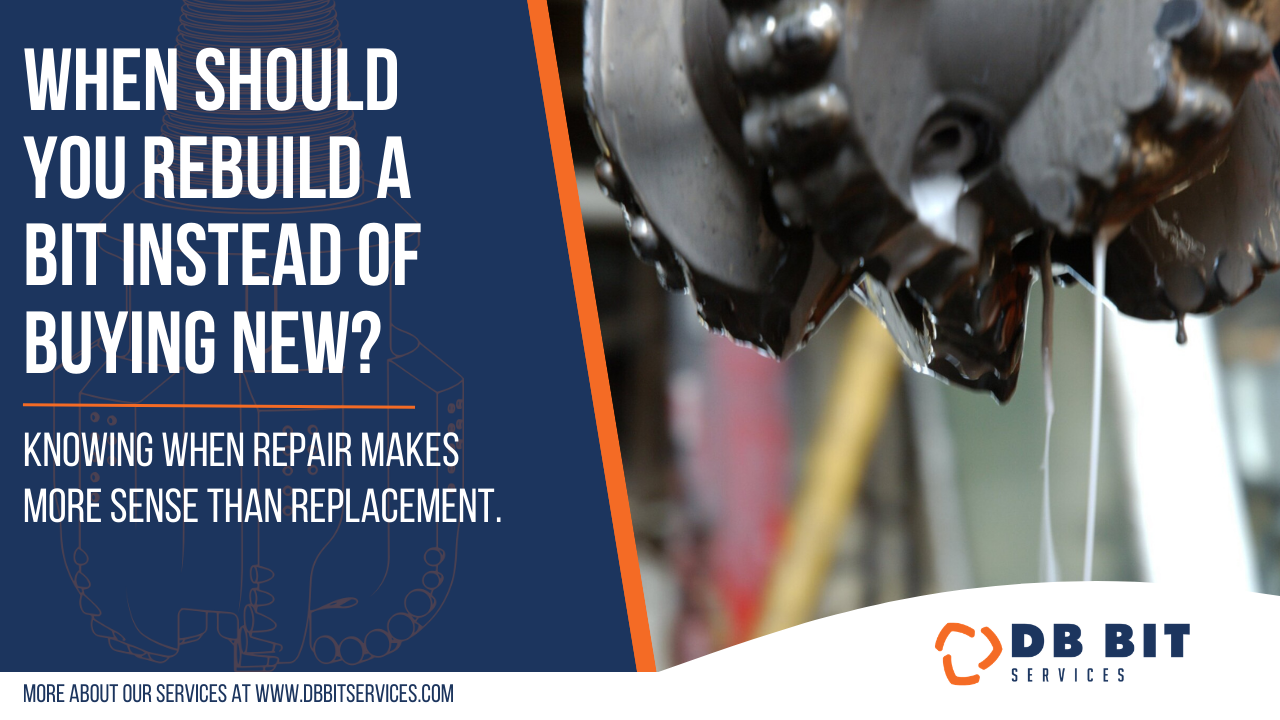
When Should You Rebuild a Bit Instead of Buying New? DB Bit Services StaIn a fast-paced drilling program, it’s tempting to default to buying new bits when damage occurs or performance drops. But for many operators, rebuilding a bit is not only a more economical option—it’s also the smarter one. At DB Bit Services, we specialize in restoring performance to worn bits that still have life left in them. But the real value starts with knowing when a rebuild makes sense. 1. The Body Is Structurally Sound If your bit’s core structure is intact—meaning no significant washouts, cracks, or deformation—then it’s a strong candidate for repair. Surface wear, dull cutters, and minor damage can be resolved through services like: Cutter replacement Brazing Hardfacing Pocket or nozzle repair Stabilizer and gauge pad restoration In these cases, you’re not investing in a “half solution”—you’re restoring the bit to a condition that’s ready for more footage. 2. The Bit Has a Track Record Worth Preserving Some bits just work. If a specific design or setup has performed well in your formation, rebuilding it lets you retain that consistency—rather than starting over with a new design that may not drill the same. This is especially true for matrix-body bits, where custom geometries, rake angles, and cutter layouts have already been field-proven. Rebuilding preserves that known performance. 3. You're Looking to Control Costs Without Sacrificing Quality New bits are expensive—especially if you're buying multiple units for batch drilling or multi-well pads. Repairing and rebuilding gives you a chance to stretch capital further without cutting corners. A properly rebuilt bit can: Lower your cost-per-foot Reduce overall bit spending Extend your inventory life Keep rigs turning to the right without waiting on new shipments 4. The Turnaround Time Fits Your Drilling Schedule DB Bit Services offers fast, dependable repair turnaround times—often faster than sourcing a new bit from the manufacturer or supplier, especially during high-demand periods. If you have a short window to get back in the hole, rebuilds can keep your program moving without delay. When to Consider Buying New Instead There are situations where replacement is the right call. These include: Cracks through the bit body or excessive erosion Severe deformation or body distortion Irreversible washout in nozzle or port areas Design no longer suitable for the planned formation In these cases, our team will let you know directly—and help you avoid investing in a repair that won’t return value. Repair with Integrity. Service You Can Trust. At DB Bit Services, we don’t just “fix bits”—we help clients make the right decision for each tool. Our goal is to extend your drilling performance, not just extend your invoice. If it’s worth repairing, we’ll tell you. If it’s not, we’ll tell you that too. Contact us today to schedule a bit inspection or receive a rebuild quote. www.dbbitservices.com
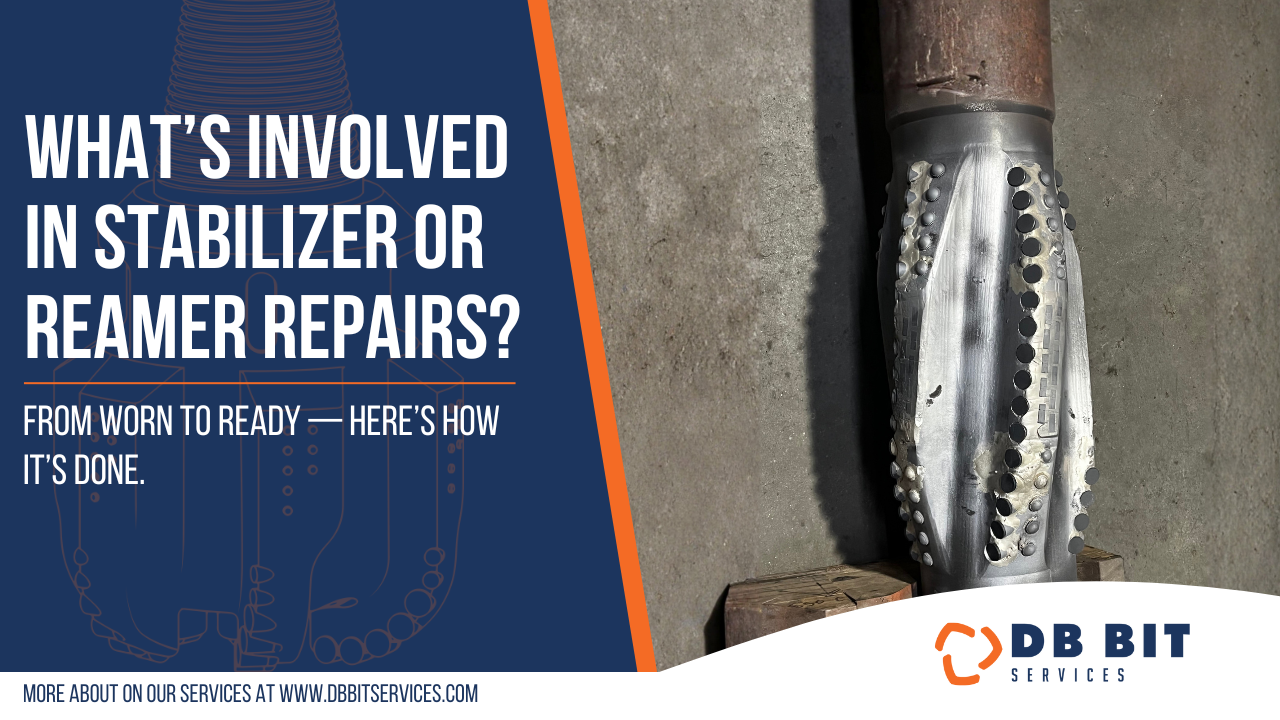
What’s Involved in Stabilizer or Reamer Repairs? DB Bit Services Stabilizers and reamers are critical tools for directional control, hole conditioning, and torque management during drilling operations. But like any downhole tool, they face wear from abrasive formations, high loads, and extended runs. At DB Bit Services, we don’t just repair drill bits—we also handle stabilizers and reamers with the same level of precision and turnaround that our customers count on. If you’ve never had one of these tools rebuilt, here’s what the process typically involves. Why Stabilizers and Reamers Need Repair Over time, stabilizers and reamers experience: Blade wear from formation contact Hardfacing erosion in high-ROP zones Gauge loss due to toolface degradation Surface cracking or washout from fluid dynamics Cutter degradation (in the case of rolling or replaceable cutter arms) Worn stabilizers or out-of-gauge reamers can lead to wellbore quality issues, toolface instability, poor directional control, or even premature bit failure. Repairs are a cost-effective way to return these tools to service without purchasing new. Our Repair Process at DB Bit Services 1. Tool Inspection & Wear Assessment We begin by measuring wear patterns, checking gauge dimensions, and evaluating blade condition. For adjustable or rolling cutter reamers, each moving part is inspected for damage or fatigue. 2. Material Removal & Cleaning Old hardfacing, build-up, or failed welds are removed. The tool is cleaned thoroughly to prep for welding and buildup. 3. Rebuilding Blade Structure Worn blades are rebuilt using compatible welding techniques and filler materials. In some cases, we replace worn arms or sections as needed. 4. Hardfacing Application Once rebuilt, the tool receives fresh hardfacing material—selected for your application and formation type. Our techs apply wear-resistant overlays using stringer or cross-hatch patterns depending on operator specs. 5. Gauge Reset & Machining Precision machining ensures the stabilizer or reamer is brought back to correct gauge. We verify symmetry, blade height, and diameter tolerance before final quality checks. Common Types of Stabilizer and Reamer Repairs We Perform Integral blade stabilizer rehardfacing Sleeve-type stabilizer rebuilds Reamer blade arm replacement Cutter assembly rebuild or rotation Gauge pad restoration Thread repair and recertification Whether you're working with a 6¾” tool or something much larger, we have the experience and equipment to handle it. Repair Over Replacement: Smarter Asset Management Repaired stabilizers and reamers offer the same directional performance and longevity as new tools—without the lead time or cost. If you’re managing inventory for an active drilling program, repairs allow you to maintain uptime and control expenses. At DB Bit Services, our turnaround is fast, our pricing is transparent, and our workmanship is trusted across multiple basins. Need a quote or want to send a tool in for evaluation? Contact us today. www.dbbitservices.com
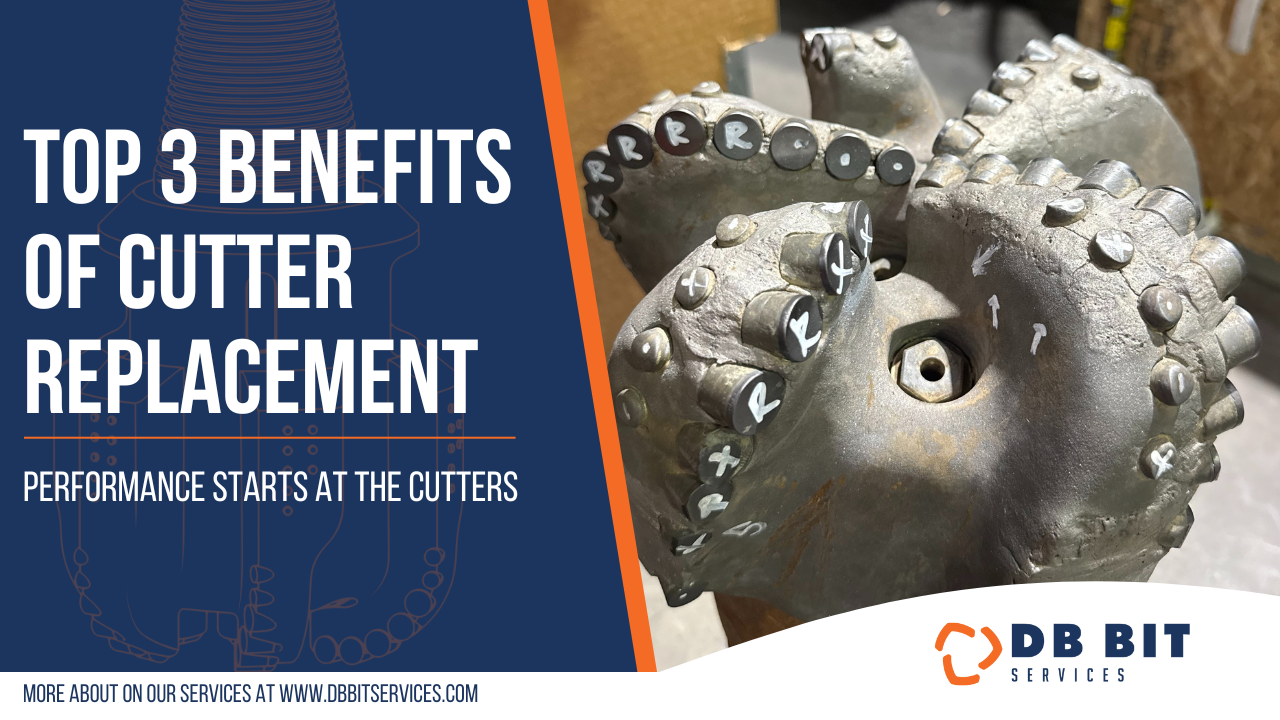
Top 3 Benefits of Cutter Replacement DB Bit Services As When it comes to drill bit performance, the cutting structure is everything. Damaged, dull, or missing cutters directly impact your rate of penetration, cost per foot, and overall job efficiency. At DB Bit Services, cutter replacement or rotation is one of the most frequent and valuable services we provide. Whether it's a single cutter or an entire blade, timely replacement or rotation can breathe new life into a used bit and help you avoid unnecessary downtime or replacement costs. Here are the top three reasons to consider cutter replacement or cutter rotation: 1. Extend Bit Life Without a Full Rebuild A full bit rebuild can be time-intensive and costlier than necessary—especially when the core body of the bit is still in good condition. In many cases, replacing only the worn or broken cutters allows for continued field use while keeping overall repair costs down. This approach preserves the bit’s structure while giving it renewed cutting power. 2. Restore Drilling Performance and Efficiency Worn or chipped cutters reduce the bit’s ability to cut effectively. This leads to slower rates of penetration, higher torque, and increased stress on other downhole tools. By replacing the damaged cutters, you restore the bit’s cutting geometry and return it to near-new drilling performance. The result is more footage drilled per hour and lower mechanical risk—without the expense of a new tool. 3. Match Cutter Type to Formation Conditions Different drilling environments require different cutter designs. At DB Bit Services, we offer multiple cutter options that align with the specific conditions of your formation—whether you're dealing with hard rock, abrasive materials, or variable formations. Our team can advise on cutter selection to ensure your bit performs as expected in the field, with longer run times and better durability. Cutter Replacement, Done Right Every bit that comes into our shop is thoroughly inspected and graded. Cutter replacement is offered only when it makes sense—and always with performance, turnaround, and customer cost in mind. We serve operators, tool companies, and drilling contractors across the Gulf Coast, the Permian, and beyond. If you're looking to restore performance and reduce downtime without replacing your entire bit inventory, cutter replacement is often the best first move. Contact us today to schedule a bit evaluation or quote. www.dbbitservices.com

Why Bit Repair Should Be in Your 2026 Budget DB Bit Services As drilling programs accelerate in 2026, operators are looking for ways to maximize efficiency and reduce unnecessary costs. One of the smartest moves you can make is incorporating bit repair into your annual budget. Whether you're running PDCs, core bits, BiCenter tools, or stabilizers, repairing your existing inventory can significantly reduce capital expenditures while keeping your drilling operations on schedule. Cost-Effective Without Sacrificing Quality The cost of a new PDC bit continues to rise. Depending on the size, design, and formation requirements, buying new can quickly cut into your budget—especially if you're managing multiple wells or working across multiple basins. Bit repair provides a more economical alternative. With services like cutter replacement, re-tipping, matrix-body restoration, and nozzle repair , operators can extend the life of existing bits at a fraction of the cost of purchasing new equipment. At DB Bit Services, we ensure quality repairs without compromising bit performance. Our technicians are experienced in restoring both steel and matrix-body bits to near-new condition. Reduce Downtime and Supply Delays Relying solely on new bit purchases often exposes operators to supply chain delays, long lead times, and unexpected equipment shortages. Repairing and maintaining your current bit inventory helps you stay ahead of operational delays and rig idle time. DB Bit Services prioritizes turnaround time, helping clients keep their jobs moving. With our in-house welding, brazing, machining, and inspection processes, we’re able to return bits to the field quickly and reliably. Maximize the Life of Your Inventory A damaged bit doesn’t always mean it’s at the end of its life. Many bits—especially those with minor wear or surface damage—can be fully restored and used for multiple runs when serviced properly. By allocating a portion of your budget toward inspection, grading, and repair , you can preserve your capital while maintaining consistent drilling performance across jobs. Planning for 2026 As you map out your 2026 drilling program, consider making bit repair a core part of your strategy. It allows you to: Reduce drilling costs Eliminate long wait times Maintain performance standards Stretch the life of your assets DB Bit Services specializes in: Steel and matrix-body PDC repairs SideTrack, BiCenter, and core bit rebuilds Stabilizer and reamer services Quick turnaround from our Conroe, TX facility Contact Us To request a quote or learn more about how we can support your operations in 2026, visit www.dbbitservices.com or reach out to our team directly.
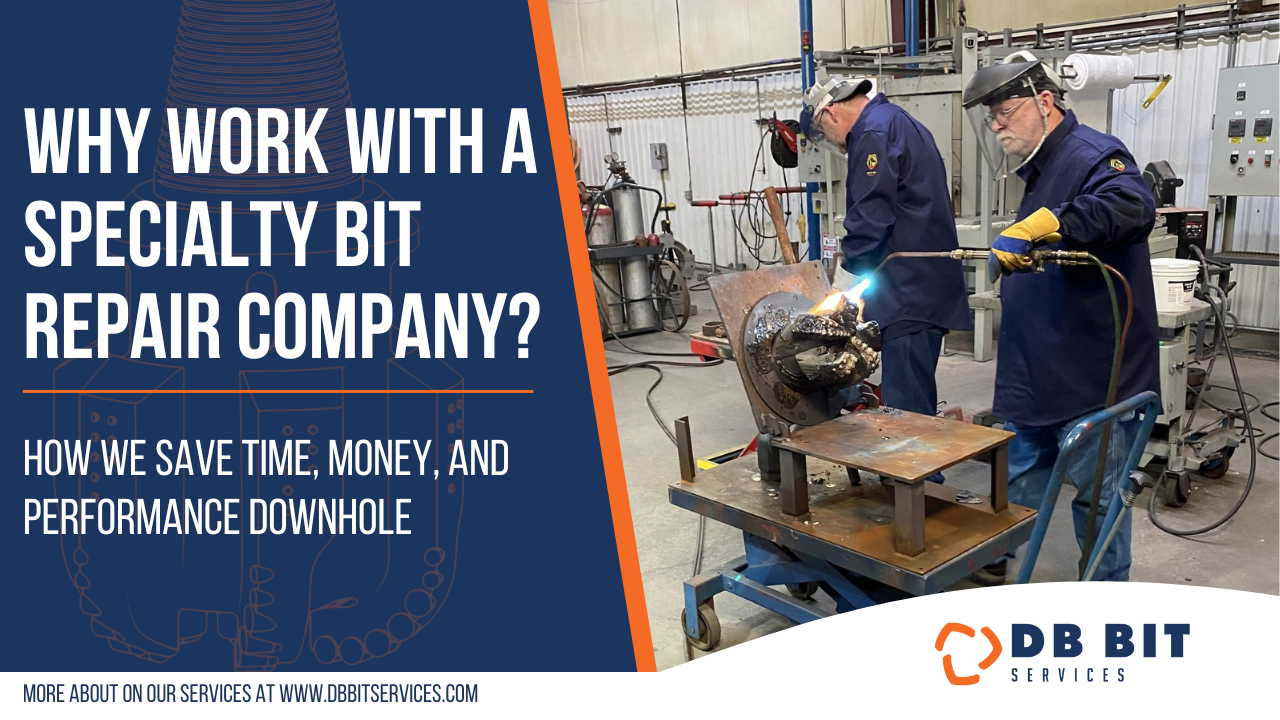
Why Work With a Specialty Bit Repair Company? DB Bit Services How Expert PDC Repair Saves Time, Money, and Performance Downhole In today’s drilling environment, operators are under constant pressure to reduce NPT, maximize ROP, and stretch budgets without sacrificing performance. One area that’s often overlooked—but carries significant financial impact—is the condition and lifecycle of the drill bits themselves. Working with a specialty bit repair company like DB Bit Services gives operators more than just a refurbished PDC bit. It provides measurable performance improvements, predictable quality, and long-term value that generic repair shops simply can’t match. 1. Precision Repair Directly Impacts Performance PDC bit condition is one of the fastest ways to influence drilling efficiency. A high-quality repair restores the bit’s original design intent, ensuring: Proper cutter placement and exposure Correct blade geometry Balanced torque response Reduced vibration and whirl Optimal ROP potential Specialty repair shops follow engineering-driven repair standards—not just “grind and glue” fixes. At DB Bit Services, every bit goes through a structured assessment, advanced welding processes, and cutter selection that mirrors OEM-level expectations. The result isn’t just a repaired bit, but a reliable tool built to perform. 2. Longer Bit Life = Lower Overall Drilling Cost A poorly repaired bit may return to the hole once. A properly repaired bit can return multiple times—often performing closer to new than expected. Working with a specialist means: Higher-quality matrix and steel-body repairs Precision diamond cutter matching Consistent edge integrity Improved durability over long intervals Each additional run extends your asset value and directly offsets the cost of purchasing new bits. Over a drilling program, this compounds into meaningful cost savings. 3. Better Grading, Tracking, and Failure Analysis What happens at the repair shop often determines what you learn for the next well. A specialty repair company gives you: Accurate and systematic bit grading Wear pattern evaluation Dull classification using industry-standard coding Root-cause analysis for cutter loss, heat checking, erosion, tracking, and bit balling This information feeds back into your drilling program so your next bit selection—and even your drilling parameters—are smarter and more efficient. DB Bit Services incorporates this data into detailed documentation that helps you understand why the bit performed the way it did and how the next run can improve. 4. Quality Assurance You Can Trust Generic repair shops vary widely in quality, equipment, and process control. Specialty bit repair companies invest in: Weld procedures designed specifically for bit metallurgy Advanced machining and cutting tools Predictive QC checks throughout the repair cycle Trained specialists who understand downhole mechanics This means every bit leaving the shop is consistent, reliable, and ready for the demands of modern drilling. 5. Faster Turnarounds Without Cutting Corners When a rig needs a repaired bit, every hour counts. But “fast” doesn’t matter unless the bit is also correct. A specialty repair company balances speed and quality by maintaining standardized workflows, experienced personnel, and equipment dedicated solely to PDC repair—no multitasking, no shortcuts. DB Bit Services is built for high-throughput repair while keeping precision at the forefront. 6. A Partner in Your Drilling Program—not Just a Vendor The real value of a specialty bit repair shop comes from working with a team that understands the operational pressures of drilling. You’re not just dropping off damaged bits—you’re building a relationship with people who: Track your bit performance over time Help you optimize bit selection Identify patterns in wear and failure Offer recommendations for improved ROP and durability This support keeps your drilling program one step ahead with every new well. The Bottom Line A PDC bit is more than another part on location—it’s a high-value tool with a direct impact on cost and performance. Working with a specialty bit repair company ensures: ✔ Higher performing repaired bits ✔ Longer bit life cycle ✔ Better dull grading and performance insight ✔ Reduced operational risk ✔ Lower drilling costs over the entire program At DB Bit Services , we combine craftsmanship, cutter technology, and engineering-driven processes to deliver repairs you can depend on—run after run.